 Frying pans & Sauté pans
 Non-stick
 Stainless steel
 Carbon steel
 Cast iron
 Cooking pots
 Demeyere Silver
 Scanpan Impact
 Scanpan Fusion 5
 Silampos Supreme Pro
 Silampos Grand Hotel
 Stellar Profile
 Stellar Equinox
 Stellar Eclipse
 Habonne Royal
 Korkmaz Proline
 Korkmaz Perla
 Sauteuses
 Dutch ovens
 Chasseur
 Lava
Lava Victoria
 Other
Other Grills & Grill pans
 Woks
Woks Carbon steel & cast iron
 Stainless steel
 Non-stick
 Kettles
 Fondue
 Tajines
 Pressure cookers
 Smoking pans
 Poffertjes pans
 Lids
Lids Splatter screens
 Miscellaneous
 Paella
 Japanese knives
 Kai Shun Classic
 Kai Shun Classic White
 Kai Shun Premier
 Kai Shun Premier Minamo
 Kai Shun Pro Sho
 Kai Kinju & Hekiju
 Kai Seki Magoroku KK Yanagiba
 Kai Seki Magoroku Kaname
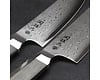 Seki Magoroku Migaki
 Kai Seki Magoroku Redwood
 Kai Seki Magoroku Shoso
 Kai Wasabi Black
 Kai Specialties
 Miyabi 7000 D
 Miyabi 4000 FC
 Miyabi 800 DP
 Miyabi 6000 MCT
 Miyabi 5000 MCD
 German knives
 Wüsthof Classic
 Wüsthof Classic Ikon
 Wüsthof Ikon
 Wüsthof Epicure
 Wüsthof Gourmet
 Burgvogel Oliva
 Robert Herder
 French knives
 Elephant ****Sabatier forged stainless steel pakkawood
 Elephant ****Sabatier forged stainless steel olivewood
 Elephant ****Sabatier forged carbon steel pakkawood
 Elephant ****Sabatier forged carbon steel olivewood
 Elephant ****Sabatier stamped stainless steel
 Laguiole en Aubrac Gourmet
 Laguiole en Aubrac Classique
 Pallares Solsona
 Carbon steel kitchen knives
 Stainless steel kitchen knives
 Cleavers
 Steak knives
 Folding knives
 Steak knives
 Pallares Solsona
 Wüsthof
 Laguiole en Aubrac
 Kai / Shun
 Saladini
 Laguiole Style de Vie
 Other
Other Honing and sharpening
 Naniwa Chosera Pro
 Naniwa Advance
 Naniwa Standard
 Other whetstones
 Sharpening rods
 Honing steels
 Knife sharpeners
 Accessories
 Accessories
 Knife guards
 Knife magnets
 Knife blocks
 Knife bags
 Bread knives
 Cleavers
 Knife sets
 Simple kitchen knives
 Folding knives
 Victorinox
 Spyderco
 Böker
Böker Coutellerie G.R.
  Laguiole en Aubrac
 Nontron
 Opinel
 Cheese knives
 Oyster knives
 Miscellaneous
 Stellar Poise
 Graters, shavers, mandolines
 Mandolines
 Microplane Master
 Microplane Premium Classic
 Microplane Gourmet
 Microplane Professional
 Other Microplanes
 Other
Other Silicone tools
 Whisks
 Strainers & Colanders
 Spatulas
 Stainless steel
 Silicone
 Wood & Pressed wood
 Plastic
 Mortars & Pestles
 Tongs & Tweezers
 Kitchen shears
 Garlic presses
 Mills & Grinders
 Peugeot Paris
 Peugeot Paris Chef
 Peugeot ParisRama
 Peugeot Paris Rouge Passion
 Peugeot various
 Zassenhaus
 Brushes
 Ladles & Serving spoons
 Nutcrackers
 Peelers
 Oyster, lobster, snail
 Mashers
 Skimmers / frying scoops
 Funnels
 Ice cream scoops
 Pizza shovels & Pizza stones
 Can openers
 Squeeze bottles
 Meat mallets
 Skewers
 Miscellaneous kitchen aids
 Tortilla presses
 Baking tins & molds
 Springform pans
 Quiche & flan tins
 Bundt pans
 Cake & bread tins
 Muffin trays
 Madeleines, savarins, angel food
 Non-stick
 (Anodized) aluminum
 Silicone
 Cast aluminum
 Ceramic
 Baking trays
 Pastry rings
 Small baking molds
 Baking cups
 Paper Panettone molds
 Chocolate
 Polycarbonate molds
 Silicone molds
 Miscellaneous chocolate tools
 Chocolate food coloring
 Chocolate
 Books
Books (Cookie) cutters
 Cutter sets
 Cookie cutter sets
 Individual cookie cutters
 Piping bags & nozzles
 Sets
Sets Piping bags
 Round piping nozzles
 Star piping nozzles
 Miscellaneous
 Accessories
 Mixing bowls
 Rolling pins
 Bread
Bread Dough scrapers
 Palette knives
 Fondant tools
 Modeling tools
 Impression mats
 Smoothers, combs & spatulas
 Fondant cutters / modelers
 Mats, paper and foil
 Acetate foil
 Silicone mats
 Cooling racks
 Brushes
 Turntables
 Cake servers
 Cake cutters / knives
 Candles
 Cake boxes
 Cake drums
 Other
Other Food coloring | gel
 Food coloring | oil based
 Food coloring | liquid
 Food coloring | powder
 Color spray & Velvet spray
 Edible markers
 Flavors
 Patis Decor natural flavors
 Patis Decor flavors
 PME flavors
 Extracts
 Glitters & decorations
 Magic sparkles (glitter flakes)
 Lustre snow
 Sugar flowers and decorations
 Sprinkles
 Fondant, Marzipan & Icing
 Fondant
 Royal icing, lace, etc.
 Biscuit Icing
 Cake drips
 Misc. ingredients
 Sugars and sugar substitutes
 Gold and silver leaf
 Mixes
Mixes Ravioli stamps
 Ravioli molds
 Pasta wheels / rollers
 Rolling pins
 Pasta makers
 Various
 Peugeot Ceramics
 Rectangular
 Square
 Other
Other Casseroles
 Roasting trays
 Terrines
 Thermometers
 Measuring jugs
 Scales
 Kitchen timers
 Measuring cups & spoons
 Other
Other Japanese tableware
 Gift sets
 Bowls
Bowls Salad bowls
 Plates
 Chopsticks
 Cutlery
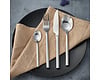 Stellar Rochester
 Stellar Sterling
 Stellar Winchester
 Stellar Raglan
 Salad bowls
 Salad servers
 Butter dishes
 Butter knives
 Heim Söhne spoons
 Trivets and coasters
 Glasses
 Serving trays
 Other
Other Percolators / moka pots
 Bialetti parts
 French presses
 Milk frothers
 Coffee grinders
 Tampers
 Espresso tools
 Milk jugs
 Coffee filters
 Tea
Tea  Teapots
 Wine tools
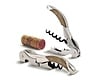 Waiter's friends / corkscrews
 Decanters
 Wine coolers
 Other
Other Cocktail tools
 Misc. bar tools
 Aprons
 Kitchen towels
 Oven mitts & pot holders
 Other
Other Wood
Wood Plastic
 Pressed wood fiber
 Wood oil
 Pots & Pans
 Knives & accessories
 Kitchen aids
 Baking & pastry
 Edibles
 Pasta
Pasta Oven
Oven Measuring
 Tableware
 Coffee & Tea
 Bar & wine
 To go & storage
 Textiles
 Books
Books Boards
 Olivewood
Seki Magoroku Migaki
Migaki (磨き) — The art of the polish
Migaki is Japanese for “polished” or “refined.” In the knife world it refers to a high-gloss blade finish — silky and shining, but not quite as reflective as a full mirror polish. In the Seki Magoroku Migaki series the name carries two layers of meaning: the literal high-gloss polish of the cutting edge, and the philosophy behind it — the continuous pursuit of perfection through repetition and mastery.
Master Line, second edition
The Migaki is the second edition of the Seki Magoroku Master Line — the absolute pinnacle of what KAI releases under this brand. Where the first edition (Kaname) drew its curved form from the torii arch of the Kamakura period, the Migaki takes inspiration from the katana. The characteristic curve of both blade and handle, the Damascus patterns that evoke rippling water, the clean hexagonal grip — everything references the aesthetics of the Japanese sword, yet fully placed at the service of the modern kitchen.
The series consists exclusively of the Gyūtō blade shape, available in three blade lengths. This is a deliberate choice: the Gyūtō is the most versatile kitchen knife in existence, and by offering a single blade type across three lengths KAI gives the user the freedom to work to measure without compromising the character of the series. The Migaki also introduces the Gyūtō shape for the first time to KAI’s European range.
The steel: VG Xeos core, 32 layers of Damascus
The Migaki blade features a VG Xeos steel core clad in 32 layers of Damascus steel. The softer outer layers envelop the hard core, absorb shocks, protect the cutting edge, and produce the characteristic visual pattern that makes every blade unique.
VG Xeos
VG Xeos is a premium alloy from Takefu Special Steel (武生特殊鋼材) — the same company that developed the renowned VG-10. It is produced via a special melting process that yields an extremely fine microstructure, resulting in measurably improved wear resistance, strength and hardenability compared to VG-10. Typical hardness: 61–62 HRC. The refined grain structure delivers longer-lasting edge retention under comparable use.
Damascus, 32 layers
Damascus steel is created by forge-welding and folding two or more different steels together. The 32 alternating layers produce the characteristic rippling pattern that evokes waves on a water surface — every blade is visually unique. After forging, the blade is chemically etched to emphasise the pattern contrast.
Migaki edge
The cutting edge itself receives an additional high-gloss polish — the migaki finish. This reduces drag during cutting, promotes clean food separation, and gives the blade its characteristic mirror-bright edge zone that distinguishes the cutting area from the Damascus-patterned body of the blade.
The blade type: Gyūtō
Gyūtō (牛刀) literally means “beef sword” — originally used for breaking down large cuts of beef. Today the Gyūtō is the Japanese equivalent of the Western chef’s knife: a knife for (almost) everything.
Compared to Western chef’s knives, the Gyūtō is ground thinner (typically 1.5–2 mm at the spine versus 2.5–3 mm for European knives), lighter in weight, and sharper in geometry — with an edge angle of around 12–15° per side instead of 20–22°. This enables a finer, cleaner cut, but calls for a little more care: harder steel is more brittle and sensitive to lateral forces.
Applications
- Meat & poultry — The pointed tip and slender blade allow precise work alongside bones. The length enables long, flowing cuts when carving. Suited for raw meat, cooked meat, carpaccio and sashimi.
- Fish & seafood — The thin geometry makes the Gyūtō highly suited to filleting, portioning, and precision-slicing fish. Fillets release cleanly without crushing or tearing.
- Vegetables & herbs — The flat section near the heel is ideal for push-cuts through hard vegetables. The belly towards the middle suits rocking motions when mincing herbs.
Cutting techniques
The Gyūtō supports all common cutting techniques: push-cut (straight down and slightly forward, for hard vegetables), pull-cut (drawing towards you for meat and fish), rock-chop (tip on the board, heel moving up and down for herbs) and tap-chop for fast, controlled chopping. The double-bevel blade is suitable for both right- and left-handers.
The handle: hexagonal pakkawood
The Migaki handle is hand-crafted from grey-marbled pakkawood with a hexagonal cross-section. Pakkawood is a composite material in which thin wood veneer is impregnated with resin under high pressure and temperature. It combines the warmth and aesthetics of wood with the moisture resistance and dimensional stability of a synthetic material.
- Hexagonal shape — Provides excellent grip and tactile orientation. The hand automatically feels the blade position without looking. Reduces hand and wrist fatigue during extended use.
- Moisture resistant — Virtually waterproof due to the resin impregnation. Does not shrink, swell or crack when exposed to moisture. Not dishwasher safe; always hand-wash and dry immediately.
- Handcrafted — Each handle is made by hand. The grey marbling varies slightly from knife to knife — evidence of artisanal production.
Heritage: 800 years of Seki
The name Seki Magoroku carries a history of almost eight centuries of swordsmiths’ craft. Seki, a city in present-day Gifu Prefecture, emerged as a swordsmithing centre during the Kamakura period (1185–1333). The legendary swordsmith Magoroku Kanemoto — also known as “Seki no Magoroku” (関孫六) — worked here during the late Muromachi period. His blades were prized by Oda Nobunaga and Toyotomi Hideyoshi. The principle his name represents — “does not bend, does not break, cuts well” — is the founding philosophy that KAI carried into its kitchen knife line when it was established in 1908.
With the Meiji era (1868) came a ban on carrying swords. Seki’s swordsmiths redirected their craft towards kitchen tools — and the city became the centre of Japanese kitchen knife production that it remains to this day. KAI was founded in 1908 by Saijiro Endo and grew into the world’s largest Japanese knife manufacturer.
Specifications
- Blade type: Gyūtō
- Core steel: VG Xeos
- Cladding: 32-layer Damascus
- Hardness: 60–62 HRC (±1)
- Grind: Double bevel (50/50)
- Finish: Migaki high-gloss + Damascus
- Handle: Hexagonal pakkawood, grey marbled
- Handedness: Right- and left-handed
- Steel maker: Takefu Special Steel, Japan
- Origin: Seki, Japan
Care
- ✅ Use a wooden or plastic cutting board. Stone, glass and ceramic will severely damage the edge.
- ✅ Hand-wash immediately after use. Dishwashers damage both the blade and handle material.
- ✅ Dry immediately after washing. Prolonged moisture can cause staining or oxidation, especially with acidic foods.
- ✅ Sharpen on a whetstone (1000–3000 grit for maintenance, 6000+ for finishing). Pull-through sharpeners and honing steels are not suitable for this steel.
- ✅ Store on a knife block or magnetic strip. Loose storage in a drawer damages the edge.
- ⚠️ Do not use for chopping bones, breaking cheese or as a lever. The thin, hard blade risks chipping or snapping under lateral force.


Other categories in Knives & accessories
Seki Magoroku Migaki
Migaki (磨き) — The art of the polish
Migaki is Japanese for “polished” or “refined.” In the knife world it refers to a high-gloss blade finish — silky and shining, but not quite as reflective as a full mirror polish. In the Seki Magoroku Migaki series the name carries two layers of meaning: the literal high-gloss polish of the cutting edge, and the philosophy behind it — the continuous pursuit of perfection through repetition and mastery.
Master Line, second edition
The Migaki is the second edition of the Seki Magoroku Master Line — the absolute pinnacle of what KAI releases under this brand. Where the first edition (Kaname) drew its curved form from the torii arch of the Kamakura period, the Migaki takes inspiration from the katana. The characteristic curve of both blade and handle, the Damascus patterns that evoke rippling water, the clean hexagonal grip — everything references the aesthetics of the Japanese sword, yet fully placed at the service of the modern kitchen.
The series consists exclusively of the Gyūtō blade shape, available in three blade lengths. This is a deliberate choice: the Gyūtō is the most versatile kitchen knife in existence, and by offering a single blade type across three lengths KAI gives the user the freedom to work to measure without compromising the character of the series. The Migaki also introduces the Gyūtō shape for the first time to KAI’s European range.
The steel: VG Xeos core, 32 layers of Damascus
The Migaki blade features a VG Xeos steel core clad in 32 layers of Damascus steel. The softer outer layers envelop the hard core, absorb shocks, protect the cutting edge, and produce the characteristic visual pattern that makes every blade unique.
VG Xeos
VG Xeos is a premium alloy from Takefu Special Steel (武生特殊鋼材) — the same company that developed the renowned VG-10. It is produced via a special melting process that yields an extremely fine microstructure, resulting in measurably improved wear resistance, strength and hardenability compared to VG-10. Typical hardness: 61–62 HRC. The refined grain structure delivers longer-lasting edge retention under comparable use.
Damascus, 32 layers
Damascus steel is created by forge-welding and folding two or more different steels together. The 32 alternating layers produce the characteristic rippling pattern that evokes waves on a water surface — every blade is visually unique. After forging, the blade is chemically etched to emphasise the pattern contrast.
Migaki edge
The cutting edge itself receives an additional high-gloss polish — the migaki finish. This reduces drag during cutting, promotes clean food separation, and gives the blade its characteristic mirror-bright edge zone that distinguishes the cutting area from the Damascus-patterned body of the blade.
The blade type: Gyūtō
Gyūtō (牛刀) literally means “beef sword” — originally used for breaking down large cuts of beef. Today the Gyūtō is the Japanese equivalent of the Western chef’s knife: a knife for (almost) everything.
Compared to Western chef’s knives, the Gyūtō is ground thinner (typically 1.5–2 mm at the spine versus 2.5–3 mm for European knives), lighter in weight, and sharper in geometry — with an edge angle of around 12–15° per side instead of 20–22°. This enables a finer, cleaner cut, but calls for a little more care: harder steel is more brittle and sensitive to lateral forces.
Applications
- Meat & poultry — The pointed tip and slender blade allow precise work alongside bones. The length enables long, flowing cuts when carving. Suited for raw meat, cooked meat, carpaccio and sashimi.
- Fish & seafood — The thin geometry makes the Gyūtō highly suited to filleting, portioning, and precision-slicing fish. Fillets release cleanly without crushing or tearing.
- Vegetables & herbs — The flat section near the heel is ideal for push-cuts through hard vegetables. The belly towards the middle suits rocking motions when mincing herbs.
Cutting techniques
The Gyūtō supports all common cutting techniques: push-cut (straight down and slightly forward, for hard vegetables), pull-cut (drawing towards you for meat and fish), rock-chop (tip on the board, heel moving up and down for herbs) and tap-chop for fast, controlled chopping. The double-bevel blade is suitable for both right- and left-handers.
The handle: hexagonal pakkawood
The Migaki handle is hand-crafted from grey-marbled pakkawood with a hexagonal cross-section. Pakkawood is a composite material in which thin wood veneer is impregnated with resin under high pressure and temperature. It combines the warmth and aesthetics of wood with the moisture resistance and dimensional stability of a synthetic material.
- Hexagonal shape — Provides excellent grip and tactile orientation. The hand automatically feels the blade position without looking. Reduces hand and wrist fatigue during extended use.
- Moisture resistant — Virtually waterproof due to the resin impregnation. Does not shrink, swell or crack when exposed to moisture. Not dishwasher safe; always hand-wash and dry immediately.
- Handcrafted — Each handle is made by hand. The grey marbling varies slightly from knife to knife — evidence of artisanal production.
Heritage: 800 years of Seki
The name Seki Magoroku carries a history of almost eight centuries of swordsmiths’ craft. Seki, a city in present-day Gifu Prefecture, emerged as a swordsmithing centre during the Kamakura period (1185–1333). The legendary swordsmith Magoroku Kanemoto — also known as “Seki no Magoroku” (関孫六) — worked here during the late Muromachi period. His blades were prized by Oda Nobunaga and Toyotomi Hideyoshi. The principle his name represents — “does not bend, does not break, cuts well” — is the founding philosophy that KAI carried into its kitchen knife line when it was established in 1908.
With the Meiji era (1868) came a ban on carrying swords. Seki’s swordsmiths redirected their craft towards kitchen tools — and the city became the centre of Japanese kitchen knife production that it remains to this day. KAI was founded in 1908 by Saijiro Endo and grew into the world’s largest Japanese knife manufacturer.
Specifications
- Blade type: Gyūtō
- Core steel: VG Xeos
- Cladding: 32-layer Damascus
- Hardness: 60–62 HRC (±1)
- Grind: Double bevel (50/50)
- Finish: Migaki high-gloss + Damascus
- Handle: Hexagonal pakkawood, grey marbled
- Handedness: Right- and left-handed
- Steel maker: Takefu Special Steel, Japan
- Origin: Seki, Japan
Care
- ✅ Use a wooden or plastic cutting board. Stone, glass and ceramic will severely damage the edge.
- ✅ Hand-wash immediately after use. Dishwashers damage both the blade and handle material.
- ✅ Dry immediately after washing. Prolonged moisture can cause staining or oxidation, especially with acidic foods.
- ✅ Sharpen on a whetstone (1000–3000 grit for maintenance, 6000+ for finishing). Pull-through sharpeners and honing steels are not suitable for this steel.
- ✅ Store on a knife block or magnetic strip. Loose storage in a drawer damages the edge.
- ⚠️ Do not use for chopping bones, breaking cheese or as a lever. The thin, hard blade risks chipping or snapping under lateral force.