 Frying pans & Sauté pans
 Non-stick
 Stainless steel
 Carbon steel
 Cast iron
 Cooking pots
 Demeyere Silver
 Scanpan Impact
 Scanpan Fusion 5
 Silampos Supreme Pro
 Silampos Grand Hotel
 Stellar Profile
 Stellar Equinox
 Stellar Eclipse
 Habonne Royal
 Korkmaz Proline
 Korkmaz Perla
 Sauteuses
 Dutch ovens
 Chasseur
 Lava
Lava Victoria
 Other
Other Grills & Grill pans
 Woks
Woks Carbon steel & cast iron
 Stainless steel
 Non-stick
 Kettles
 Fondue
 Tajines
 Pressure cookers
 Smoking pans
 Poffertjes pans
 Lids
Lids Splatter screens
 Miscellaneous
 Paella
 Japanese knives
 Kai Shun Classic
 Kai Shun Classic White
 Kai Shun Premier
 Kai Shun Premier Minamo
 Kai Shun Pro Sho
 Kai Kinju & Hekiju
 Kai Seki Magoroku KK Yanagiba
 Kai Seki Magoroku Kaname
 Seki Magoroku Migaki
 Kai Seki Magoroku Redwood
 Kai Seki Magoroku Shoso
 Kai Wasabi Black
 Kai Specialties
 Miyabi 7000 D
 Miyabi 4000 FC
 Miyabi 800 DP
 Miyabi 6000 MCT
 Miyabi 5000 MCD
 German knives
 Wüsthof Classic
 Wüsthof Classic Ikon
 Wüsthof Ikon
 Wüsthof Epicure
 Wüsthof Gourmet
 Burgvogel Oliva
 Robert Herder
 French knives
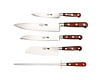 Elephant ****Sabatier forged stainless steel pakkawood
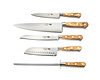 Elephant ****Sabatier forged stainless steel olivewood
 Elephant ****Sabatier forged carbon steel pakkawood
 Elephant ****Sabatier forged carbon steel olivewood
 Elephant ****Sabatier stamped stainless steel
 Laguiole en Aubrac Gourmet
 Laguiole en Aubrac Classique
 Pallares Solsona
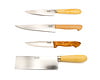 Carbon steel kitchen knives
 Stainless steel kitchen knives
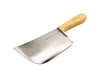 Cleavers
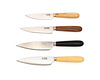 Steak knives
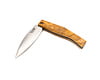 Folding knives
 Steak knives
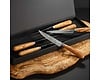 Pallares Solsona
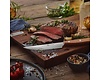 Wüsthof
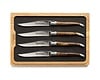 Laguiole en Aubrac
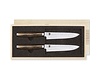 Kai / Shun
 Saladini
 Laguiole Style de Vie
 Other
Other Honing and sharpening
 Naniwa Chosera Pro
 Naniwa Advance
 Naniwa Standard
 Other whetstones
 Sharpening rods
 Honing steels
 Knife sharpeners
 Accessories
 Accessories
 Knife guards
 Knife magnets
 Knife blocks
 Knife bags
 Bread knives
 Cleavers
 Knife sets
 Simple kitchen knives
 Folding knives
 Victorinox
 Spyderco
 Böker
Böker Coutellerie G.R.
  Laguiole en Aubrac
 Nontron
 Opinel
 Cheese knives
 Oyster knives
 Miscellaneous
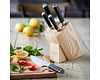 Stellar Poise
 Graters, shavers, mandolines
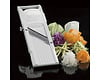 Mandolines
 Microplane Master
 Microplane Premium Classic
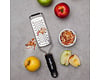 Microplane Gourmet
 Microplane Professional
 Other Microplanes
 Other
Other Silicone tools
 Whisks
 Strainers & Colanders
 Spatulas
 Stainless steel
 Silicone
 Wood & Pressed wood
 Plastic
 Mortars & Pestles
 Tongs & Tweezers
 Kitchen shears
 Garlic presses
 Mills & Grinders
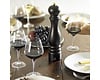 Peugeot Paris
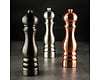 Peugeot Paris Chef
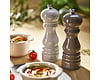 Peugeot ParisRama
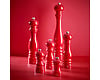 Peugeot Paris Rouge Passion
 Peugeot various
 Zassenhaus
 Brushes
 Ladles & Serving spoons
 Nutcrackers
 Peelers
 Oyster, lobster, snail
 Mashers
 Skimmers / frying scoops
 Funnels
 Ice cream scoops
 Pizza shovels & Pizza stones
 Can openers
 Squeeze bottles
 Meat mallets
 Skewers
 Miscellaneous kitchen aids
 Tortilla presses
 Citrus presses
 Baking tins & molds
 Springform pans
 Quiche & flan tins
 Bundt pans
 Cake & bread tins
 Muffin trays
 Madeleines, savarins, angel food
 Non-stick
 (Anodized) aluminum
 Silicone
 Cast aluminum
 Ceramic
 Baking trays
 Pastry rings
 Small baking molds
 Baking cups
 Paper Panettone molds
 Chocolate
 Polycarbonate molds
 Silicone molds
 Miscellaneous chocolate tools
 Chocolate food coloring
 Chocolate
 Books
Books (Cookie) cutters
 Cutter sets
 Cookie cutter sets
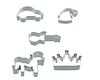 Individual cookie cutters
 Piping bags & nozzles
 Sets
Sets Piping bags
 Round piping nozzles
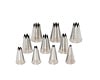 Star piping nozzles
 Miscellaneous
 Accessories
 Mixing bowls
 Rolling pins
 Bread
Bread Dough scrapers
 Palette knives
 Fondant tools
 Modeling tools
 Impression mats
 Smoothers, combs & spatulas
 Fondant cutters / modelers
 Mats, paper and foil
 Acetate foil
 Silicone mats
 Cooling racks
 Brushes
 Turntables
 Cake servers
 Cake cutters / knives
 Candles
 Cake boxes
 Cake drums
 Other
Other Food coloring | gel
 Food coloring | oil based
 Food coloring | liquid
 Food coloring | powder
 Color spray & Velvet spray
 Edible markers
 Flavors
 Patis Decor natural flavors
 Patis Decor flavors
 PME flavors
 Extracts
 Glitters & decorations
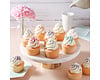 Magic sparkles (glitter flakes)
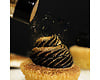 Lustre snow
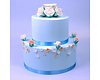 Sugar flowers and decorations
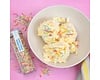 Sprinkles
 Fondant, Marzipan & Icing
 Fondant
 Royal icing, lace, etc.
 Biscuit Icing
 Cake drips
 Misc. ingredients
 Sugars and sugar substitutes
 Gold and silver leaf
 Mixes
Mixes Ravioli stamps
 Ravioli molds
 Pasta wheels / rollers
 Rolling pins
 Pasta makers
 Various
 Peugeot Ceramics
 Rectangular
 Square
 Other
Other Casseroles
 Roasting trays
 Terrines
 Thermometers
 Measuring jugs
 Scales
 Kitchen timers
 Measuring cups & spoons
 Other
Other Japanese tableware
 Gift sets
 Bowls
Bowls Salad bowls
 Plates
 Chopsticks
 Chopstick rests
 Cutlery
 Stellar Rochester
 Stellar Sterling
 Stellar Winchester
 Stellar Raglan
 Salad bowls
 Salad servers
 Butter dishes
 Butter knives
 Heim Söhne spoons
 Trivets and coasters
 Glasses
 Serving trays
 Other
Other Percolators / moka pots
 Bialetti parts
 French presses
 Milk frothers
 Coffee grinders
 Tampers
 Espresso tools
 Milk jugs
 Coffee filters
 Tea
Tea  Teapots
 Wine tools
 Waiter's friends / corkscrews
 Decanters
 Wine coolers
 Other
Other Cocktail tools
 Misc. bar tools
 Aprons
 Kitchen towels
 Oven mitts & pot holders
 Other
Other Wood
Wood Plastic
 Pressed wood fiber
 Wood oil
 Pots & Pans
 Knives & accessories
 Kitchen aids
 Baking & pastry
 Edibles
 Pasta
Pasta Oven
Oven Measuring
 Tableware
 Coffee & Tea
 Bar & wine
 To go & storage
 Textiles
 Books
Books Boards
 Olivewood
Elephant ****Sabatier forged stainless steel olivewood
Sabatier Elephant - genuine craftsmanship from Thiers
The name Sabatier has signified the highest quality knives from Thiers for over two centuries. Thiers is a town in the Auvergne that has been the centre of the French cutlery industry since the fifteenth century. But be aware: the Sabatier name is not a protected trademark. Dozens of manufacturers use it, ranging from artisan smiths to industrial mass producers. The second word or symbol next to "Sabatier" is therefore decisive for quality.
The knives on this page bear the **** Elephant Sabatier mark of Thiers-Issard, founded in 1884 by Pierre Thiers (after the city) and his wife Issard. Thiers-Issard is widely regarded as one of the last genuine artisan knife makers in France and exports its knives to around thirty countries. The four-star elephant symbol was registered in 1958 by the third generation of the family and serves as a guarantee of the highest level of Sabatier craftsmanship: fully hand-forged, in Thiers, from start to finish.
Fully forged - from a single piece of steel
"Fully forged" means that the blade, bolster (the metal collar between blade and handle) and tang (the steel extension running through the handle) are all made from a single piece of steel. A steel bar is heated and hammered into a die to achieve the basic shape, then hardened, ground, and finished by hand. The handle scales are attached with three brass rivets.
This fundamentally distinguishes forged knives from stamped knives, where the blade is cut from a steel sheet. Forging gives the steel a denser, stronger structure and creates integral balance in the knife: the bolster shifts the centre of gravity to exactly the right position for a comfortable pinch grip.
Each knife is individually finished by hand by specialist craftspeople in Thiers. Minor variations between knives are therefore a mark of artisanal production, not a defect.
The steel: stainless steel X50CrMoV15
The blades in this series are forged from X50CrMoV15 stainless steel - also designated 1.4116 (DIN standard) or 4116. This is one of the most widely used steels for quality European kitchen knives and is selected by makers such as Thiers-Issard for its excellent balance between performance and ease of maintenance.
Composition and properties
- Carbon (C): approx. 0.50-0.55% - Provides hardness and edge retention. Lower than in carbon steel, which makes this steel less susceptible to oxidation but also slightly less capable of achieving the very finest edge of the best carbon steels.
- Chromium (Cr): approx. 15% - The high chromium content makes the steel virtually stainless. Chromium carbides also increase tensile strength and wear resistance.
- Molybdenum (Mo) and vanadium (V) - Improve toughness, corrosion resistance, and edge stability. Vanadium refines grain structure and contributes to a sharper, more durable edge.
- Hardness: 54-57 HRC - A practical hardness window for kitchen knives: hard enough for good edge retention, yet tough enough not to chip under normal use.
- Corrosion resistance: excellent - Resistant to moisture, lemon juice, vinegar and other acids common in the kitchen. Staining is possible with prolonged contact with aggressive substances, but rust does not form under normal use.
- Ease of sharpening: good - Easier to sharpen than harder Japanese steels. A whetstone or ceramic honing rod is sufficient to restore the cutting edge.
Care
Stainless steel requires significantly less maintenance than carbon steel: rinsing, washing and drying is sufficient for daily use. Always hand-wash - the dishwasher damages both blade and handle.
The handle: olivewood
The handle scales of this series are made from olivewood (Olea europaea) - one of the most prized woods for knife making. Olive trees grow extremely slowly; the high density and complex grain that result make the wood particularly well suited for kitchen use.
- Unique character - No two pieces of olivewood are identical. The grain varies from creamy beige to deep brown with dark streaks and flowing patterns. Each knife therefore has its own visual identity.
- Hardness and density - Olivewood is up to 60% harder (Brinell) than native oak species and is virtually non-porous. This makes it exceptionally wear-resistant and able to withstand the daily demands of a kitchen.
- Natural oils - The wood naturally contains oils that repel moisture, bacteria and odours. This makes it more hygienic than many other woods and increases longevity.
- Warmth and grip - Olivewood feels warm and organic in the hand, unlike synthetic or metal handles. During extended use this results in less fatigue.
- Care - Hand-wash and dry immediately. Olivewood can dry out slightly over time; rubbing occasionally with a drop of olive oil keeps the wood supple and extends its life.
The handle scales are attached with three brass rivets, the classic hallmark of artisanal French kitchen knives. The bolster - forged as part of the blade - forms a seamless transition from steel to wood.
The French profile
The knives in the Sabatier Elephant series follow the classic French chef's knife profile: a narrow, pointed blade with a gently curved edge, a relatively high tip and limited blade height compared to the broader German or Japanese Gyuto profile. This makes the knife particularly agile for precision work with the tip - such as cutting shallots, working around bones, or filleting fish.
The classic French profile has strongly influenced modern kitchen knives. Knife historians regularly point out that the Japanese Gyuto profile - which developed in the twentieth century as a response to Western cuisine - was directly inspired by the French Sabatier knife.
Applications
- Vegetables and herbs - The pointed tip enables precise work; the curved edge lends itself to the rocking motion when mincing herbs.
- Meat and poultry - Long, flowing pull-cuts when carving; precise movements alongside bones thanks to the slender blade.
- Fish - The thin, flexible geometry of the French profile is well suited to filleting and portioning fish.
- General use - Usable as a universal chef's knife for almost all preparation tasks in the kitchen.
Care
- ✅ Hand-wash immediately after use. Dishwashers damage both blade and handle material - aggressive detergent, high temperature and knocks from other objects attack both the steel and the wood.
- ✅ Dry immediately after washing, including the handle.
- ✅ Use a wooden or plastic cutting board. Stone, glass and ceramic severely damage the cutting edge.
- ✅ Sharpen on a whetstone or ceramic honing rod. X50CrMoV15 sharpens well; regular honing keeps the edge sharp.
- ✅ Store on a knife block or magnetic strip. Loose storage in a drawer damages the cutting edge.
- ⚠️ Do not use on hard bones, frozen products or as a lever. Forged steel is strong, but lateral forces can damage the cutting edge.
Specifications
- Manufacturer: Thiers-Issard, Thiers, France
- Brand mark: **** Elephant Sabatier
- Steel: Stainless steel X50CrMoV15 (1.4116)
- Hardness: 54-57 HRC
- Corrosion resistance: Excellent - virtually maintenance-free
- Construction: Fully forged, full tang
- Bolster: Integral bolster (forged with the blade)
- Grind: Double bevel, hand-finished
- Handle material: Olivewood (Olea europaea)
- Fastening: Three brass rivets
- Origin: Thiers, France


Other categories in Knives & accessories
Elephant ****Sabatier forged stainless steel olivewood
Sabatier Elephant - genuine craftsmanship from Thiers
The name Sabatier has signified the highest quality knives from Thiers for over two centuries. Thiers is a town in the Auvergne that has been the centre of the French cutlery industry since the fifteenth century. But be aware: the Sabatier name is not a protected trademark. Dozens of manufacturers use it, ranging from artisan smiths to industrial mass producers. The second word or symbol next to "Sabatier" is therefore decisive for quality.
The knives on this page bear the **** Elephant Sabatier mark of Thiers-Issard, founded in 1884 by Pierre Thiers (after the city) and his wife Issard. Thiers-Issard is widely regarded as one of the last genuine artisan knife makers in France and exports its knives to around thirty countries. The four-star elephant symbol was registered in 1958 by the third generation of the family and serves as a guarantee of the highest level of Sabatier craftsmanship: fully hand-forged, in Thiers, from start to finish.
Fully forged - from a single piece of steel
"Fully forged" means that the blade, bolster (the metal collar between blade and handle) and tang (the steel extension running through the handle) are all made from a single piece of steel. A steel bar is heated and hammered into a die to achieve the basic shape, then hardened, ground, and finished by hand. The handle scales are attached with three brass rivets.
This fundamentally distinguishes forged knives from stamped knives, where the blade is cut from a steel sheet. Forging gives the steel a denser, stronger structure and creates integral balance in the knife: the bolster shifts the centre of gravity to exactly the right position for a comfortable pinch grip.
Each knife is individually finished by hand by specialist craftspeople in Thiers. Minor variations between knives are therefore a mark of artisanal production, not a defect.
The steel: stainless steel X50CrMoV15
The blades in this series are forged from X50CrMoV15 stainless steel - also designated 1.4116 (DIN standard) or 4116. This is one of the most widely used steels for quality European kitchen knives and is selected by makers such as Thiers-Issard for its excellent balance between performance and ease of maintenance.
Composition and properties
- Carbon (C): approx. 0.50-0.55% - Provides hardness and edge retention. Lower than in carbon steel, which makes this steel less susceptible to oxidation but also slightly less capable of achieving the very finest edge of the best carbon steels.
- Chromium (Cr): approx. 15% - The high chromium content makes the steel virtually stainless. Chromium carbides also increase tensile strength and wear resistance.
- Molybdenum (Mo) and vanadium (V) - Improve toughness, corrosion resistance, and edge stability. Vanadium refines grain structure and contributes to a sharper, more durable edge.
- Hardness: 54-57 HRC - A practical hardness window for kitchen knives: hard enough for good edge retention, yet tough enough not to chip under normal use.
- Corrosion resistance: excellent - Resistant to moisture, lemon juice, vinegar and other acids common in the kitchen. Staining is possible with prolonged contact with aggressive substances, but rust does not form under normal use.
- Ease of sharpening: good - Easier to sharpen than harder Japanese steels. A whetstone or ceramic honing rod is sufficient to restore the cutting edge.
Care
Stainless steel requires significantly less maintenance than carbon steel: rinsing, washing and drying is sufficient for daily use. Always hand-wash - the dishwasher damages both blade and handle.
The handle: olivewood
The handle scales of this series are made from olivewood (Olea europaea) - one of the most prized woods for knife making. Olive trees grow extremely slowly; the high density and complex grain that result make the wood particularly well suited for kitchen use.
- Unique character - No two pieces of olivewood are identical. The grain varies from creamy beige to deep brown with dark streaks and flowing patterns. Each knife therefore has its own visual identity.
- Hardness and density - Olivewood is up to 60% harder (Brinell) than native oak species and is virtually non-porous. This makes it exceptionally wear-resistant and able to withstand the daily demands of a kitchen.
- Natural oils - The wood naturally contains oils that repel moisture, bacteria and odours. This makes it more hygienic than many other woods and increases longevity.
- Warmth and grip - Olivewood feels warm and organic in the hand, unlike synthetic or metal handles. During extended use this results in less fatigue.
- Care - Hand-wash and dry immediately. Olivewood can dry out slightly over time; rubbing occasionally with a drop of olive oil keeps the wood supple and extends its life.
The handle scales are attached with three brass rivets, the classic hallmark of artisanal French kitchen knives. The bolster - forged as part of the blade - forms a seamless transition from steel to wood.
The French profile
The knives in the Sabatier Elephant series follow the classic French chef's knife profile: a narrow, pointed blade with a gently curved edge, a relatively high tip and limited blade height compared to the broader German or Japanese Gyuto profile. This makes the knife particularly agile for precision work with the tip - such as cutting shallots, working around bones, or filleting fish.
The classic French profile has strongly influenced modern kitchen knives. Knife historians regularly point out that the Japanese Gyuto profile - which developed in the twentieth century as a response to Western cuisine - was directly inspired by the French Sabatier knife.
Applications
- Vegetables and herbs - The pointed tip enables precise work; the curved edge lends itself to the rocking motion when mincing herbs.
- Meat and poultry - Long, flowing pull-cuts when carving; precise movements alongside bones thanks to the slender blade.
- Fish - The thin, flexible geometry of the French profile is well suited to filleting and portioning fish.
- General use - Usable as a universal chef's knife for almost all preparation tasks in the kitchen.
Care
- ✅ Hand-wash immediately after use. Dishwashers damage both blade and handle material - aggressive detergent, high temperature and knocks from other objects attack both the steel and the wood.
- ✅ Dry immediately after washing, including the handle.
- ✅ Use a wooden or plastic cutting board. Stone, glass and ceramic severely damage the cutting edge.
- ✅ Sharpen on a whetstone or ceramic honing rod. X50CrMoV15 sharpens well; regular honing keeps the edge sharp.
- ✅ Store on a knife block or magnetic strip. Loose storage in a drawer damages the cutting edge.
- ⚠️ Do not use on hard bones, frozen products or as a lever. Forged steel is strong, but lateral forces can damage the cutting edge.
Specifications
- Manufacturer: Thiers-Issard, Thiers, France
- Brand mark: **** Elephant Sabatier
- Steel: Stainless steel X50CrMoV15 (1.4116)
- Hardness: 54-57 HRC
- Corrosion resistance: Excellent - virtually maintenance-free
- Construction: Fully forged, full tang
- Bolster: Integral bolster (forged with the blade)
- Grind: Double bevel, hand-finished
- Handle material: Olivewood (Olea europaea)
- Fastening: Three brass rivets
- Origin: Thiers, France