


 Frying pans & Sauté pans
 Non-stick
 Stainless steel
 Carbon steel
 Cast iron
 Cooking pots
 Demeyere Silver
 Scanpan Impact
 Scanpan Fusion 5
 Silampos Supreme Pro
 Silampos Grand Hotel
 Stellar Profile
 Stellar Equinox
 Stellar Eclipse
 Habonne Royal
 Korkmaz Proline
 Korkmaz Perla
 Sauteuses
 Dutch ovens
 Chasseur
 Lava
Lava Victoria
 Other
Other Grills & Grill pans
 Woks
Woks Carbon steel & cast iron
 Stainless steel
 Non-stick
 Kettles
 Fondue
 Tajines
 Pressure cookers
 Smoking pans
 Poffertjes pans
 Lids
Lids Splatter screens
 Miscellaneous
 Paella
 Japanese knives
 Kai Shun Classic
 Kai Shun Classic White
 Kai Shun Premier
 Kai Shun Premier Minamo
 Kai Shun Pro Sho
 Kai Kinju & Hekiju
 Kai Seki Magoroku KK Yanagiba
 Kai Seki Magoroku Kaname
 Seki Magoroku Migaki
 Kai Seki Magoroku Redwood
 Kai Seki Magoroku Shoso
 Kai Wasabi Black
 Kai Specialties
 Miyabi 7000 D
 Miyabi 4000 FC
 Miyabi 800 DP
 Miyabi 6000 MCT
 Miyabi 5000 MCD
 German knives
 Wüsthof Classic
 Wüsthof Classic Ikon
 Wüsthof Ikon
 Wüsthof Epicure
 Wüsthof Gourmet
 Burgvogel Oliva
 Robert Herder
 French knives
 Elephant ****Sabatier forged stainless steel pakkawood
 Elephant ****Sabatier forged stainless steel olivewood
 Elephant ****Sabatier forged carbon steel pakkawood
 Elephant ****Sabatier forged carbon steel olivewood
 Elephant ****Sabatier stamped stainless steel
 Laguiole en Aubrac Gourmet
 Laguiole en Aubrac Classique
 Pallares Solsona
 Carbon steel kitchen knives
 Stainless steel kitchen knives
 Cleavers
 Steak knives
 Folding knives
 Steak knives
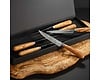 Pallares Solsona
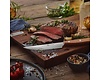 Wüsthof
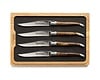 Laguiole en Aubrac
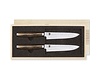 Kai / Shun
 Saladini
 Laguiole Style de Vie
 Other
Other Honing and sharpening
 Whetstones
 Sharpening rods
 Honing steels
 Knife sharpeners
 Accessories
 Accessories
 Knife guards
 Knife magnets
 Knife blocks
 Knife bags
 Bread knives
 Cleavers
 Knife sets
 Simple kitchen knives
 Folding knives
 Victorinox
 Spyderco
 Böker
Böker Coutellerie G.R.
  Laguiole en Aubrac
 Cheese knives
 Oyster knives
 Miscellaneous
 Stellar Poise
 Graters, shavers, mandolines
 Mandolines
 Microplane Master
 Microplane Premium Classic
 Microplane Gourmet
 Microplane Professional
 Other Microplanes
 Other
Other Silicone tools
 Whisks
 Strainers & Colanders
 Spatulas
 Stainless steel
 Silicone
 Wood & Pressed wood
 Plastic
 Mortars & Pestles
 Tongs & Tweezers
 Kitchen shears
 Garlic presses
 Mills & Grinders
 Peugeot Paris
 Peugeot Paris Chef
 Peugeot ParisRama
 Peugeot Paris Rouge Passion
 Peugeot various
 Zassenhaus
 Brushes
 Ladles & Serving spoons
 Nutcrackers
 Peelers
 Oyster, lobster, snail
 Mashers
 Skimmers / frying scoops
 Funnels
 Ice cream scoops
 Pizza shovels & Pizza stones
 Can openers
 Squeeze bottles
 Meat mallets
 Skewers
 Miscellaneous kitchen aids
 Tortilla presses
 Baking tins & molds
 Springform pans
 Quiche & flan tins
 Bundt pans
 Cake & bread tins
 Muffin trays
 Madeleines, savarins, angel food
 Non-stick
 (Anodized) aluminum
 Silicone
 Cast aluminum
 Ceramic
 Baking trays
 Pastry rings
 Small baking molds
 Baking cups
 Paper Panettone molds
 Chocolate
 Polycarbonate molds
 Silicone molds
 Miscellaneous chocolate tools
 Chocolate food coloring
 (Cookie) cutters
 Cutter sets
 Cookie cutter sets
 Individual cookie cutters
 Piping bags & nozzles
 Sets
Sets Piping bags
 Round piping nozzles
 Star piping nozzles
 Miscellaneous
 Accessories
 Mixing bowls
 Rolling pins
 Bread
Bread Dough scrapers
 Palette knives
 Fondant tools
 Modeling tools
 Impression mats
 Smoothers, combs & spatulas
 Fondant cutters / modelers
 Mats, paper and foil
 Acetate foil
 Silicone mats
 Cooling racks
 Brushes
 Turntables
 Cake servers
 Cake cutters / knives
 Candles
 Cake boxes
 Cake drums
 Other
Other Food coloring | gel
 Food coloring | oil based
 Food coloring | liquid
 Food coloring | powder
 Color spray & Velvet spray
 Edible markers
 Flavors
 Patis Decor natural flavors
 Patis Decor flavors
 PME flavors
 Extracts
 Glitters & decorations
 Magic sparkles (glitter flakes)
 Lustre snow
 Sugar flowers and decorations
 Sprinkles
 Fondant, Marzipan & Icing
 Fondant
 Royal icing, lace, etc.
 Biscuit Icing
 Cake drips
 Misc. ingredients
 Sugars and sugar substitutes
 Gold and silver leaf
 Mixes
Mixes Ravioli stamps
 Ravioli molds
 Pasta wheels / rollers
 Rolling pins
 Pasta makers
 Various
 Peugeot Ceramics
 Rectangular
 Square
 Other
Other Casseroles
 Roasting trays
 Terrines
 Thermometers
 Measuring jugs
 Scales
 Kitchen timers
 Measuring cups & spoons
 Other
Other Japanese tableware
 Gift sets
 Bowls
Bowls Salad bowls
 Plates
 Chopsticks
 Cutlery
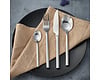 Stellar Rochester
 Stellar Sterling
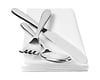 Stellar Winchester
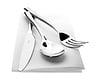 Stellar Raglan
 Salad bowls
 Salad servers
 Butter dishes
 Butter knives
 Heim Söhne spoons
 Trivets and coasters
 Glasses
 Serving trays
 Other
Other Percolators / moka pots
 Bialetti parts
 French presses
 Milk frothers
 Coffee grinders
 Tampers
 Espresso tools
 Milk jugs
 Coffee filters
 Tea
Tea  Teapots
 Wine tools
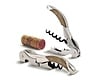 Waiter's friends / corkscrews
 Decanters
 Wine coolers
 Other
Other Cocktail tools
 Misc. bar tools
 Aprons
 Kitchen towels
 Oven mitts & pot holders
 Other
Other Wood
Wood Plastic
 Pressed wood fiber
 Wood oil
 Pots & Pans
 Knives & accessories
 Kitchen aids
 Baking & pastry
 Edibles
 Pasta
Pasta Oven
Oven Measuring
 Tableware
 Coffee & Tea
 Bar & wine
 To go & storage
 Textiles
 Books
Books Boards
 Olivewood
Robert Herder
Robert Herder Windmühlenmesser - knives made the way they always were
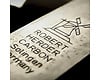
There are very few companies in the world still making their products today exactly as they did more than a hundred years ago. Robert Herder Windmühlenmesser in Solingen is one of them. Founded in 1872 by Robert Herder, a descendant of steel temperers from the Bergisches Land, the company is now in its fourth generation and still in family hands. The knives are still ground on machines older than the people operating them. The handles are still hand-polished and shaped. And every knife still bears the mark of the windmill - the Windmühlenmesser.
The name says it all. Windmühle is German for windmill, and the windmill logo has been the company's trademark for over a century. Paul Herder, who led the company through much of the twentieth century, described the essence of his knives in a phrase that holds true to this day: "Thin, tough, nail-proved, with a razor-sharp edge - each bearing a label, only real with the red stripe."
Solingen - the city of blades
Solingen, a city in the Bergisches Land region of North Rhine-Westphalia, has been known as the knife city of Germany for centuries. Since the Middle Ages, knives, swords and scissors have been produced here; the combination of soft water from the Bergische rivers (essential for grinding), iron ore from the surrounding area and a long tradition of artisanal knowledge transfer made Solingen the European centre of the cutlery industry.
The city's reputation for quality is so strong that "Made in Solingen" is a protected designation: only products actually manufactured in Solingen may bear this name. But even within Solingen, there are significant differences. Most of the major names in the city now produce on an industrial scale. Robert Herder takes a different path: an artisanal manufactory that keeps alive the traditional grinding techniques that have virtually disappeared everywhere else.
The Solinger Dünnschliff - a dying art kept alive
At the heart of every Windmühlenmesser knife is the Solinger Dünnschliff - the Solingen thin grind. This is not a marketing term but a specific, extremely labour-intensive grinding technique that has been practised in Solingen for centuries and of which Robert Herder is one of the last custodians.
With the Dünnschliff, the blade is dry-ground on traditional grinding wheels. The grinding angle reaches much further up the blade than is standard in modern knives, so that the blade tapers progressively to an extremely thin cutting edge across its full height. The result is a blade that is not only sharp at the edge but becomes progressively thinner across its full width - a geometry that modern machine grinding can barely replicate.
Blue glazing - the most refined technique
The most demanding variant of the Dünnschliff is blue glazing (Blaupolieren). The blade surface is ground and polished in successive steps until the steel is so smooth that the microscopic grinding marks produce a subtle bluish-rainbow shimmer in the light. This is not a colour treatment but an optical effect of the extremely fine, regular surface structure.
Blue glazing was originally developed in the era before stainless steel, with the aim of polishing the carbon steel surface so densely that oxidation could barely take hold. Today, blue glazing has above all an aesthetic and artisanal value: it is the visible evidence of exceptional craftsmanship.
The knowledge of blue glazing was in danger of disappearing entirely. Robert Herder undertook years of negotiations with the Solingen Chamber of Industry and Commerce to revive the traditional grinding trades as recognised apprenticeship professions. With the help of master grinder Wilfried Fehrekampf - one of the last true masters of the traditional Solingen grinding techniques - a training programme was built that shaped young grinders well past his retirement age. His successors carry the work forward.
The steel: carbon steel with vanadium
The K-series knives are made from a European carbon steel with a carbon content of at least 1% and an addition of vanadium. This steel combines properties that are rarely found together in competing products.
Composition and properties
- Carbon: at least 1% - A high carbon content, comparable to Japanese Aogami 2 (Blue Paper #2) steel. This enables an exceptionally sharp, fine cutting edge and provides excellent edge retention.
- Vanadium - The addition of vanadium refines the grain structure of the steel, increases toughness and improves wear resistance. This is precisely the property that distinguishes Robert Herder's steel from simpler carbon steels: the combination of sharpness and toughness is rare.
- Hardness blue-glazed blades around 60 HRC - Considerably harder than average European kitchen knife carbon steel. The high hardness combined with the thin grind delivers cutting performance comparable to quality Japanese knives.
- No chromium - This is carbon steel, not stainless steel. The steel oxidises with prolonged moisture contact and develops a patina. This is inherent to the material choice, not a defect.
- Ease of sharpening: excellent - Carbon steel with vanadium responds quickly to a whetstone and takes a razor-sharp edge. Thanks to the thin geometry, only a few strokes are needed to restore the edge.
Comparison with Japanese steels
The K-series steel is regularly compared by connoisseurs to Japanese Aogami 2 - the popular Blue Paper carbon steel used in high-end Japanese knives. The parallels are striking: both have high carbon content, excellent edge retention, and develop a patina with use. The distinction lies in origin and tradition: where Aogami 2 is the foundation of Japanese grinding culture, Robert Herder's steel is the product of a century and a half of Solingen artisanal tradition.
The K-series - Solingen craftsmanship, Japanese inspiration
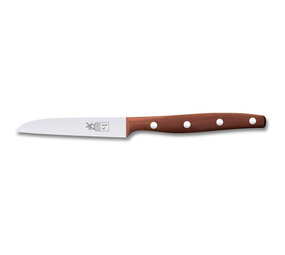
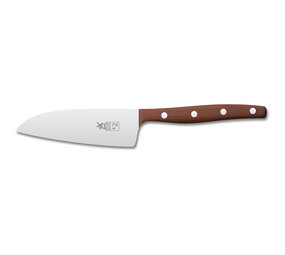
The K-series is the most contemporary expression of the Windmühlenmesser philosophy. The blades are inspired by Japanese double-bevel (50/50) knife design: thinner, lighter and with a sharper angle than the traditional European chef's knife. At the same time they are made entirely in Solingen using the house's own techniques.
What sets the K-series apart from virtually all other Western knives in the same price range is the geometry. The blades are ground exceptionally thin - not only at the cutting edge but across the full width of the blade. This, combined with a slight hollow grind that reduces food sticking, produces a cutting feel that many buyers associate with quality Japanese knives. The handles are ergonomically shaped and hand-polished from local woods such as plum or walnut.
Models in the K-series
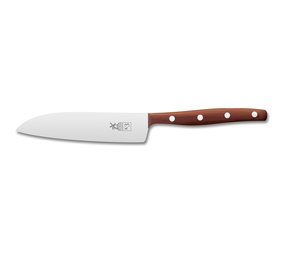
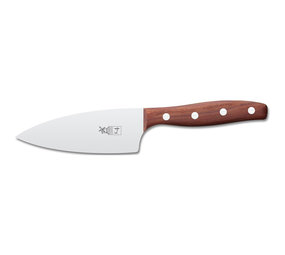
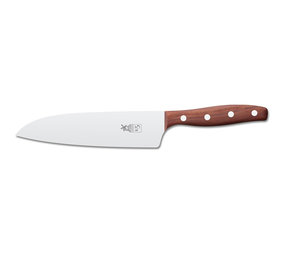
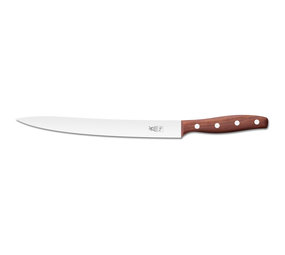
- K1 - Paring and peeling knife for fine work
- K2 - Wide petty knife, versatile for smaller tasks
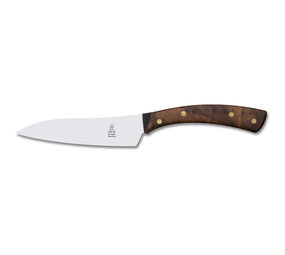
- K3 - Compact chef's / fillet knife
- K4 - Small chef's knife for everyday use
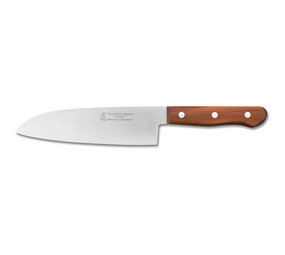
- K5 - Santoku format, the most versatile model
- K6 - Slicing knife for meat and fish
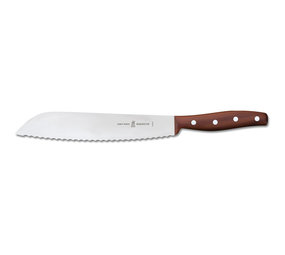
- KB - Bread knife with double serrated edge
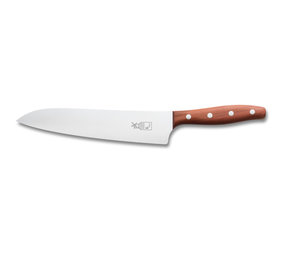
- K Chef - Large chef's knife for professional use
A knife for life
Robert Herder offers a 25-year warranty on material and manufacturing defects. But the real promise goes further than that. The knives are designed and made to withstand sharpening, generation after generation. They become thinner with use and sharper with sharpening. They develop character as they are used. They are not meant to be replaced.
This is a fundamentally different starting point from the vast majority of the kitchen knife industry. In a world of disposable products and planned obsolescence, Robert Herder makes knives the way that was always the standard: good enough to last a lifetime.
Care
- ✅ Hand-wash immediately after use. Never put in the dishwasher. Carbon steel oxidises quickly with prolonged moisture contact.
- ✅ Dry immediately and thoroughly after washing, including the handle.
- ✅ Use a wooden or plastic cutting board. Stone, glass and ceramic severely damage the thin cutting edge.
- ✅ Sharpen on a fine whetstone (1000-3000 grit for maintenance, 6000+ for finishing). Due to the thin geometry, only a few strokes are needed.
- ✅ For long-term storage: apply a thin coat of neutral oil to prevent oxidation.
- ✅ Patina is normal and desirable. A grey-brown discoloured blade is a sign of use and character.
- ⚠️ Due to the thin grind: do not use on hard bones, frozen products or as a lever. The blades are exceptionally sharp but not designed for heavy chopping or lateral forces.
Specifications K-series (carbon)
- Manufacturer: Robert Herder Windmühlenmesser, Solingen, Germany
- Founded: 1872, family business (fourth generation)
- Steel: European carbon steel, at least 1% C + vanadium
- Hardness: 60 HRC
- Grinding technique: Solinger Dünnschliff, dry fine grinding, blue glazing
- Finish: Blue glaze (blue-polished)
- Grind: Double bevel (50/50), Japanese-inspired profile
- Handle: Hand-polished wood (plum or walnut depending on model)
- Warranty: 25 years on material and manufacturing defects
- Origin: Solingen, Germany
Other categories in Knives & accessories
Robert Herder
Robert Herder Windmühlenmesser - knives made the way they always were
There are very few companies in the world still making their products today exactly as they did more than a hundred years ago. Robert Herder Windmühlenmesser in Solingen is one of them. Founded in 1872 by Robert Herder, a descendant of steel temperers from the Bergisches Land, the company is now in its fourth generation and still in family hands. The knives are still ground on machines older than the people operating them. The handles are still hand-polished and shaped. And every knife still bears the mark of the windmill - the Windmühlenmesser.
The name says it all. Windmühle is German for windmill, and the windmill logo has been the company's trademark for over a century. Paul Herder, who led the company through much of the twentieth century, described the essence of his knives in a phrase that holds true to this day: "Thin, tough, nail-proved, with a razor-sharp edge - each bearing a label, only real with the red stripe."
Solingen - the city of blades
Solingen, a city in the Bergisches Land region of North Rhine-Westphalia, has been known as the knife city of Germany for centuries. Since the Middle Ages, knives, swords and scissors have been produced here; the combination of soft water from the Bergische rivers (essential for grinding), iron ore from the surrounding area and a long tradition of artisanal knowledge transfer made Solingen the European centre of the cutlery industry.
The city's reputation for quality is so strong that "Made in Solingen" is a protected designation: only products actually manufactured in Solingen may bear this name. But even within Solingen, there are significant differences. Most of the major names in the city now produce on an industrial scale. Robert Herder takes a different path: an artisanal manufactory that keeps alive the traditional grinding techniques that have virtually disappeared everywhere else.
The Solinger Dünnschliff - a dying art kept alive
At the heart of every Windmühlenmesser knife is the Solinger Dünnschliff - the Solingen thin grind. This is not a marketing term but a specific, extremely labour-intensive grinding technique that has been practised in Solingen for centuries and of which Robert Herder is one of the last custodians.
With the Dünnschliff, the blade is dry-ground on traditional grinding wheels. The grinding angle reaches much further up the blade than is standard in modern knives, so that the blade tapers progressively to an extremely thin cutting edge across its full height. The result is a blade that is not only sharp at the edge but becomes progressively thinner across its full width - a geometry that modern machine grinding can barely replicate.
Blue glazing - the most refined technique
The most demanding variant of the Dünnschliff is blue glazing (Blaupolieren). The blade surface is ground and polished in successive steps until the steel is so smooth that the microscopic grinding marks produce a subtle bluish-rainbow shimmer in the light. This is not a colour treatment but an optical effect of the extremely fine, regular surface structure.
Blue glazing was originally developed in the era before stainless steel, with the aim of polishing the carbon steel surface so densely that oxidation could barely take hold. Today, blue glazing has above all an aesthetic and artisanal value: it is the visible evidence of exceptional craftsmanship.
The knowledge of blue glazing was in danger of disappearing entirely. Robert Herder undertook years of negotiations with the Solingen Chamber of Industry and Commerce to revive the traditional grinding trades as recognised apprenticeship professions. With the help of master grinder Wilfried Fehrekampf - one of the last true masters of the traditional Solingen grinding techniques - a training programme was built that shaped young grinders well past his retirement age. His successors carry the work forward.
The steel: carbon steel with vanadium
The K-series knives are made from a European carbon steel with a carbon content of at least 1% and an addition of vanadium. This steel combines properties that are rarely found together in competing products.
Composition and properties
- Carbon: at least 1% - A high carbon content, comparable to Japanese Aogami 2 (Blue Paper #2) steel. This enables an exceptionally sharp, fine cutting edge and provides excellent edge retention.
- Vanadium - The addition of vanadium refines the grain structure of the steel, increases toughness and improves wear resistance. This is precisely the property that distinguishes Robert Herder's steel from simpler carbon steels: the combination of sharpness and toughness is rare.
- Hardness blue-glazed blades around 60 HRC - Considerably harder than average European kitchen knife carbon steel. The high hardness combined with the thin grind delivers cutting performance comparable to quality Japanese knives.
- No chromium - This is carbon steel, not stainless steel. The steel oxidises with prolonged moisture contact and develops a patina. This is inherent to the material choice, not a defect.
- Ease of sharpening: excellent - Carbon steel with vanadium responds quickly to a whetstone and takes a razor-sharp edge. Thanks to the thin geometry, only a few strokes are needed to restore the edge.
Comparison with Japanese steels
The K-series steel is regularly compared by connoisseurs to Japanese Aogami 2 - the popular Blue Paper carbon steel used in high-end Japanese knives. The parallels are striking: both have high carbon content, excellent edge retention, and develop a patina with use. The distinction lies in origin and tradition: where Aogami 2 is the foundation of Japanese grinding culture, Robert Herder's steel is the product of a century and a half of Solingen artisanal tradition.
The K-series - Solingen craftsmanship, Japanese inspiration
The K-series is the most contemporary expression of the Windmühlenmesser philosophy. The blades are inspired by Japanese double-bevel (50/50) knife design: thinner, lighter and with a sharper angle than the traditional European chef's knife. At the same time they are made entirely in Solingen using the house's own techniques.
What sets the K-series apart from virtually all other Western knives in the same price range is the geometry. The blades are ground exceptionally thin - not only at the cutting edge but across the full width of the blade. This, combined with a slight hollow grind that reduces food sticking, produces a cutting feel that many buyers associate with quality Japanese knives. The handles are ergonomically shaped and hand-polished from local woods such as plum or walnut.
Models in the K-series
- K1 - Paring and peeling knife for fine work
- K2 - Wide petty knife, versatile for smaller tasks
- K3 - Compact chef's / fillet knife
- K4 - Small chef's knife for everyday use
- K5 - Santoku format, the most versatile model
- K6 - Slicing knife for meat and fish
- KB - Bread knife with double serrated edge
- K Chef - Large chef's knife for professional use
A knife for life
Robert Herder offers a 25-year warranty on material and manufacturing defects. But the real promise goes further than that. The knives are designed and made to withstand sharpening, generation after generation. They become thinner with use and sharper with sharpening. They develop character as they are used. They are not meant to be replaced.
This is a fundamentally different starting point from the vast majority of the kitchen knife industry. In a world of disposable products and planned obsolescence, Robert Herder makes knives the way that was always the standard: good enough to last a lifetime.
Care
- ✅ Hand-wash immediately after use. Never put in the dishwasher. Carbon steel oxidises quickly with prolonged moisture contact.
- ✅ Dry immediately and thoroughly after washing, including the handle.
- ✅ Use a wooden or plastic cutting board. Stone, glass and ceramic severely damage the thin cutting edge.
- ✅ Sharpen on a fine whetstone (1000-3000 grit for maintenance, 6000+ for finishing). Due to the thin geometry, only a few strokes are needed.
- ✅ For long-term storage: apply a thin coat of neutral oil to prevent oxidation.
- ✅ Patina is normal and desirable. A grey-brown discoloured blade is a sign of use and character.
- ⚠️ Due to the thin grind: do not use on hard bones, frozen products or as a lever. The blades are exceptionally sharp but not designed for heavy chopping or lateral forces.
Specifications K-series (carbon)
- Manufacturer: Robert Herder Windmühlenmesser, Solingen, Germany
- Founded: 1872, family business (fourth generation)
- Steel: European carbon steel, at least 1% C + vanadium
- Hardness: 60 HRC
- Grinding technique: Solinger Dünnschliff, dry fine grinding, blue glazing
- Finish: Blue glaze (blue-polished)
- Grind: Double bevel (50/50), Japanese-inspired profile
- Handle: Hand-polished wood (plum or walnut depending on model)
- Warranty: 25 years on material and manufacturing defects
- Origin: Solingen, Germany
